Golf Coaching: The Complete Guide for Players and Coaches (2026)
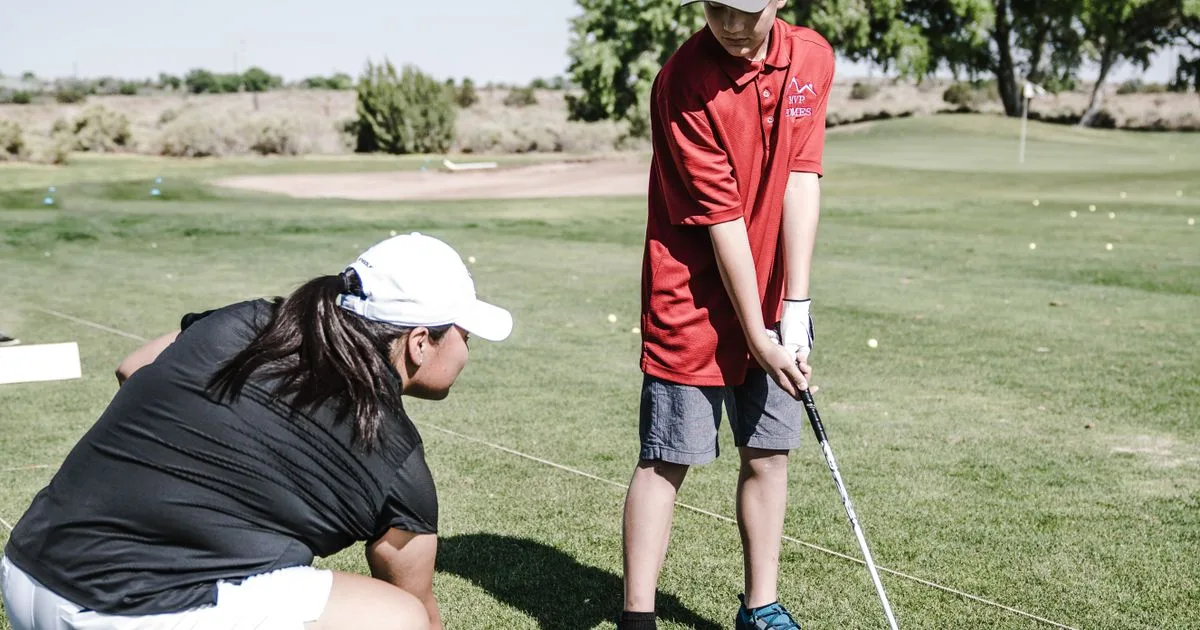
Only one in ten beginners receives professional golf instruction, yet that investment nearly doubles their chance of sticking with the sport. Research from the National Golf Foundation shows 42% of players taught by a PGA professional become committed golfers, compared to just 20% of those taught by friends or family (National Golf Foundation, 2024). That gap explains why coaching is the single highest-leverage activity in golf, for the player trying to improve and the club trying to retain members.
This guide covers everything both sides need to know: what coaching actually is in 2026, whether it works (and when it doesn't), what it costs, how to choose the right coach, and how the best coaches structure their programs.
Key Takeaways
- Professional instruction nearly doubles beginner conversion: 42% become committed golfers vs 20% taught by friends (NGF, 2024).
- Golfers who track round statistics improve their handicap by 3.38 strokes on average vs 1.38 for non-trackers (Golf Insider, 2024).
- Lesson pricing ranges from $50-150/hr in the US and £30-90/hr in the UK depending on credentials and format.
- The gap between lessons, not the lessons themselves, is where most improvement is won or lost.
What Is Golf Coaching in 2026?
Golf is growing faster than it has in decades. US participation hit 48 million on- and off-course in 2025, with 29 million on-course players making it eight straight years of growth, a 50% increase over the past decade (National Golf Foundation, 2026). Globally, the R&A counts 108 million players across its markets, up roughly 3 million year on year. That boom has changed what coaching means and what players expect from it.
A decade ago, a "lesson" meant standing on a mat with a pro while they adjusted your grip and sent you off to practise. That model still exists, but it sits alongside a much wider range of options: online video coaching, remote swing analysis, data-led sessions built around launch monitor numbers, and hybrid programmes where an in-person assessment is followed by weeks of app-based drill assignments and round data review.
What has not changed is the core job. A good coach takes a player from where they are to where they want to be, more reliably and faster than the player would get there alone. The technology has expanded the toolkit. It hasn't replaced the relationship.
What types of golf coaching exist?
- In-person lessons: One-to-one sessions at a range or course, ranging from a single 45-minute slot to structured packages.
- Group clinics: Lower cost per person, useful for beginners and for specific skill areas (short game, putting, course management).
- Online coaching: Video submission reviewed by a remote coach, increasingly popular post-pandemic.
- Data-led programmes: Sessions anchored in launch monitor metrics (ball speed, spin axis, path) or GPS round data (strokes gained, shot patterns).
- Academy programmes: Multi-week curricula run by head pros or coaching teams at clubs, often with a junior focus.
For a breakdown of the tools that power these programme types, see the golf coaching software guide.
Does Golf Coaching Actually Work?
The conversion numbers tell the strongest story. Beginners who receive professional instruction become committed golfers at 42% versus only 20% for those taught by friends or family, according to NGF data from 2024 (National Golf Foundation, 2024). With only about one in ten beginners currently receiving professional lessons, that gap represents an enormous amount of untapped potential, both for individual improvement and for the game as a whole.
But the picture gets more nuanced once you move beyond beginners. A 12-month study tracking 257 golfers found that lessons alone did not guarantee handicap improvement for players already below a 30 handicap (Golf Insider, 2024). The golfers who improved most were those who combined lessons with structured practice. Lesson-takers scored 57/100 on a practice focus index vs 47/100 for those practising without guidance. The lesson doesn't create improvement. It creates a framework for practice that does.
The stat-tracking finding from the same study is striking. Golfers who kept playing statistics throughout the year dropped their handicap by 3.38 strokes on average. Those who didn't track dropped it by just 1.38 strokes. The tracking itself didn't make their swings better. It made their practice and coaching sessions more purposeful. For a practical application of that finding, see how to lower your handicap with data.
The honest verdict: Golf coaching works. But it works best as a system, not a series of standalone appointments. One-off lessons without structured practice between them produce minimal long-term improvement for most mid-to-high handicappers.
How Much Do Golf Lessons Cost?
Lesson pricing varies considerably by market, coach credentials, format, and session length. In the US, private lessons with a PGA professional typically run $50-150 per hour, based on instructor listings compiled by Lessons.com. UK golfers can expect to pay £30-90 per hour, with higher rates in London and at premium facilities (Kevin Delaney Golf, 2025). In continental Europe, including Belgium, the typical range is roughly €50-150 per hour depending on the coach's experience and club affiliation.
What drives price differences? A few factors matter most.
Credentials. PGA-certified professionals command a premium. More than 75% of golfers who took lessons worked with a certified PGA professional (Club + Resort Business, NGF data), and that certification signals a baseline standard of training. Independent coaches without accreditation may charge less but come with more variability in quality.
Technology. Sessions using launch monitors (TrackMan, FlightScope) or 3D motion capture typically cost more than mat-and-eye lessons. That premium can be worth it if the data meaningfully informs your practice. For a beginner still working on basic contact, it often isn't.
Format. Group clinics and academy programmes almost always cost less per hour than private sessions. A six-week short-game clinic at a modest per-session price can be a smart entry point, especially for beginners who aren't sure whether they want to commit to private coaching.
Packages vs single sessions. Most coaches offer a discount for booking a block of lessons upfront, typically five or ten sessions. The financial incentive aligns with good coaching practice: improvement takes time, and a package creates accountability for both sides.
How Do You Choose a Golf Coach?
More than 75% of golfers who take lessons choose a certified PGA professional, according to NGF research cited by Club + Resort Business. That majority is well-placed. PGA certification requires hundreds of hours of study across teaching methodology, player development, and business management. It's not a guarantee of quality, but it's a meaningful baseline.
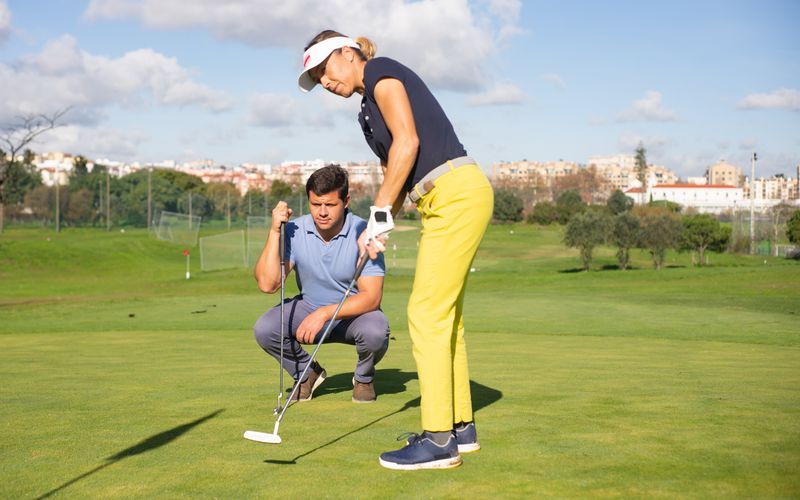
Beyond certification, here's how to evaluate a coach before committing.
Ask about their teaching philosophy. A good coach should be able to explain in plain language how they approach building a player's game. Watch out for rigid "one method" coaches who apply the same fix to every student regardless of physique, goals, or skill level.
Check their communication style. You'll spend a lot of time listening to this person explain complex motor skills. Do they communicate clearly? Do they ask about your goals or just start making adjustments? The best coaches are curious about the player in front of them.
Ask whether they use data. This doesn't mean every coach needs a TrackMan. It means ask whether they track your progress between sessions. Do they keep notes? Do they assign drills with specific goals? A coach who can't explain how they measure improvement probably doesn't.
Red flags to watch for:
- Vague answers to "how will you measure my progress?"
- No follow-up contact or drill assignments between lessons
- Criticism of other coaches without context
- Pressure to buy a large lesson package upfront before you've had a trial session
Questions to ask before your first lesson:
- What are your qualifications and how long have you been teaching?
- How do you structure a programme for a player at my level?
- What should I be doing between lessons?
- How do you communicate with students between sessions?
- Can I start with a single assessment lesson before committing to a package?
Curious what tools a modern coach might use with you? See the best golf coach apps roundup.
What Should Happen Between Lessons?
Here's an uncomfortable truth about golf instruction: for most players below a 30 handicap, the lesson itself isn't where improvement is won. The Golf Insider study of 257 golfers found that lesson-takers scored 57/100 on a practice focus index versus 47/100 for players practising without coaching guidance (Golf Insider, 2024). Lessons work because they shape how you practise. Remove the structured practice, and most of the lesson's value disappears.
What does the science say about how to practise between lessons? Peer-reviewed research is fairly clear on two points. Distributed practice, shorter sessions spread across multiple days, consistently outperforms massed practice for novice golfers (Barzyk & Gruber, Frontiers in Sports and Active Living, 2024). And random or varied practice, mixing different shots or drills in a single session, produces better long-term retention than blocked practice (repeating one shot type until it feels grooved), even though it feels harder and messier in the moment (Fazeli et al., PubMed, 2017). For a session-by-session template built on this research, see the science-backed golf practice plan.
What does a good between-lessons structure actually look like? In practice, it has four components.
Assigned drills with a clear purpose. Not "practise your short game" but "spend 15 minutes on this specific chipping drill targeting this ball flight." Purposeless range time is where golfers reinforce bad habits rather than building new ones.
Round data review. Bringing actual on-course statistics to a lesson is qualitatively different from arriving with a vague sense of what went wrong. Shot patterns from tracked rounds reveal whether a swing fault is showing up on the course, not just on the range.
Check-ins between sessions. A quick message from coach to student, or a short video review, keeps the lesson's focus alive. Most improvement decays within a week if left unmanaged.
Scheduled reflection. After each practice session, even one sentence written down ("the drill worked on the range but I'm still losing the trail elbow in pressure situations") closes the loop between effort and learning.
Our observation across the coaching platforms we've reviewed: the coaches whose students show the most consistent improvement are rarely those with the most sophisticated swing analysis setup. They're the ones who build accountability structures between lessons. The lesson is the diagnosis. Practice is the medicine. Without a system for the latter, the former becomes expensive and ultimately frustrating.
What Technology Do Modern Golf Coaches Use?
Nearly 27 million golf lessons are delivered each year in the US alone, generating over $1.5 billion annually in instruction revenue (NGF via The Golf Wire, 2024). At that scale, technology has become central to how coaching businesses operate, not just how coaches analyse swings.
Modern coaching technology falls into four broad categories.
Video analysis. The foundation of almost every teaching pro's workflow. Platforms like V1 Golf, OnForm, and Coach's Eye offer slow-motion capture, frame-by-frame comparison, and annotation tools. Students can submit swings from home; coaches review and annotate before the next session. This extends the lesson's value significantly without adding billable time.
Launch monitors. Devices like TrackMan, FlightScope, and Foresight GC3 measure ball speed, launch angle, spin rate, club path, and face angle with high precision. They're most valuable for intermediate-to-advanced players where small changes in data produce measurable on-course outcomes. For beginners, the data density can overwhelm rather than inform.
Scheduling and admin tools. Booking systems handle lesson appointments, payment collection, and automated reminders. Reducing no-shows and eliminating the back-and-forth of appointment setting saves hours of admin time each week.
Coaching platforms. Integrated software that combines communication, drill assignment, video sharing, and student progress tracking in one place. CoachNow, SwingU Coach, and others in this category let coaches manage multiple students systematically rather than through scattered text threads and spreadsheets.
For deeper dives, see PGA pro technology that actually works and, if you're weighing coaching platforms against each other, our Skillest alternative breakdown.
Where does Strokone sit in this stack? Strokone's focus is the data layer that connects on-course performance to coaching sessions. Coaches see their students' GPS-tracked round data, assign drills tied to what's showing up in actual rounds, and a head pro dashboard gives visibility across the whole coaching team. It doesn't replace video analysis software. It connects what happens on the course to what gets worked on at the range.
How Do You Run Golf Coaching as a Business?
The 42% vs 20% conversion rate isn't just a player development metric. It's a retention argument for every club and head pro looking at their revenue model. A beginner taught by a friend has a 20% chance of staying in the game. The same beginner taught by a PGA professional has a 42% chance (National Golf Foundation, 2024). Multiply that across a club's new-member cohort, and professional instruction becomes one of the clearest levers for long-term membership revenue.

Here's a framing that most coaching business advice misses: lessons are the retention engine of the club, not just a standalone revenue line. The lesson itself generates a fee. But the student retained through professional coaching generates green fees, competition entries, food and beverage spend, and membership renewals across years. Optimising for lesson volume alone undervalues what good coaching does for the broader business.
What does a well-run coaching business actually look like in practice?
Packages and programmes, not one-off sessions. Single lessons generate revenue but not retention. A six-lesson beginner pathway, a short-game clinic series, or a seasonal improvement programme creates a natural commitment arc. It also creates the time horizon within which coaching actually works.
Multi-coach visibility. Head pros managing a team of assistants or associates face a coordination problem: they can't be in every session, but they're accountable for the quality of every lesson delivered under their umbrella. A shared dashboard that shows each coach's student roster, lesson history, and at-risk students (those who've stopped booking or whose rounds show no improvement) turns a management challenge into a manageable workflow.
At-risk student identification. Students who go quiet are students about to churn. Understanding why golf students quit is a prerequisite for stopping it. The common pattern: they had a bad run of rounds, felt embarrassed, and quietly stopped booking rather than coming back for help. Coaches who check in proactively, using round data to spot a struggling student before they disappear, retain far more students than those who wait for the next booking.
The playbooks for managing a growing student roster and building a sustainable coaching business go deeper on both.
Golf Coaching in Europe and Belgium
The R&A's 2024 global participation report counted 108 million golfers across its markets, with 64.1 million adults and 8.4 million registered club golfers globally, up from 7.4 million in 2020 (The R&A, 2024). Europe accounts for 20.3 million adult golfers and 18.5 million junior players. That scale makes Europe one of the world's most important coaching markets, even if it operates very differently from the US model.
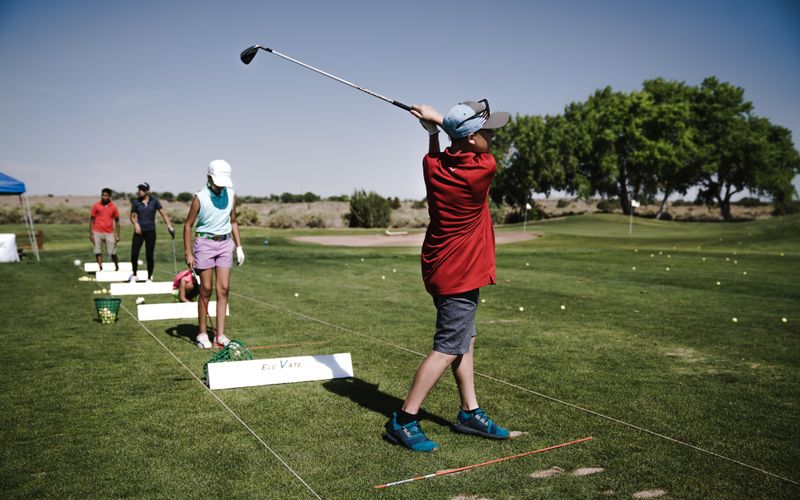
In Belgium specifically, the market is compact but well-structured. Belgium has 77,830 registered golfers, 122 courses, and 219 PGA-affiliated teaching professionals (Confederation of Professional Golf). Golf Vlaanderen governs the sport in Flanders, AFGOLF in the French-speaking south. Both bodies maintain handicap systems and sanction competitive play at club level.
Finding a coach in Belgium follows a similar path to the rest of Europe: the national PGA body (PGA of Belgium, part of the Confederation of Professional Golf) maintains a directory of qualified professionals, and most clubs employ at least one teaching pro on staff. The difference from the US model is that the club relationship is more central. European golfers tend to join a club first and find a coach through that club, rather than sourcing a coach independently.
What's changing in the European market? Three trends stand out.
Digital coaching is growing. Post-2020, online and hybrid coaching expanded significantly. Video submission coaching is now mainstream at all price points, letting Belgium-based players access coaches across borders for specialist work, putting or course management, without leaving their home club for the technical side.
Junior development is a priority. The R&A's junior participation figure of 18.5 million across its markets reflects years of investment in junior programmes. European clubs with strong junior coaching pipelines are seeing better long-term membership retention, as young players who develop through structured programmes tend to remain active adult members.
Data is arriving at club level. GPS tracking, strokes-gained analysis, and coaching software designed for the European club model, rather than the US country club or driving range studio format, are beginning to show up in club academies across Belgium, France, and the Netherlands. To see how this looks inside a club, visit Strokone for clubs.
Frequently Asked Questions
How many lessons do I need to improve?
Most coaching researchers and experienced teaching pros suggest a minimum of four to six lessons to establish and embed a meaningful change. Single lessons create awareness. A series creates habit. A 12-month study found that sustained engagement, combining lessons with structured practice, produced 3.38 strokes of average handicap improvement (Golf Insider, 2024).
Is a PGA-certified coach worth the higher price?
Yes, in most cases. More than 75% of golfers who take professional lessons choose a PGA-certified coach (Club + Resort Business, NGF data). PGA certification covers teaching methodology, not just playing ability, which matters when a coach needs to diagnose your specific fault and communicate a fix effectively. Independent coaches can be excellent, but the credential provides a meaningful quality baseline.
Can I take golf lessons online?
Yes, and online coaching has grown substantially since 2020. You submit swing videos via a coaching app; your coach reviews, annotates, and sends back feedback. The quality depends heavily on the video angles you capture and the coach's responsiveness. Online coaching works best as a supplement to in-person sessions for established players, or as an entry point for players in areas with limited local coach access.
At what age should juniors start golf coaching?
Most teaching professionals recommend starting with formal coaching around age 7-8, once a child has enough attention span and motor control to benefit from instruction. Before that, supervised play and unstructured exposure tends to build more love for the game than structured lessons. Europe's junior participation base of 18.5 million players reflects investment in age-appropriate development pathways (The R&A, 2024).
How do I know whether coaching is working?
Track your rounds. The Golf Insider study found that golfers keeping playing statistics improved their handicap by 3.38 strokes over 12 months, compared to 1.38 strokes for those who didn't track (Golf Insider, 2024). Handicap movement is the most honest output metric. Combine that with qualitative self-assessment: do you understand your misses better? Do you have a practice structure you're actually following?
The Bottom Line
Golf coaching works. Professional instruction nearly doubles the rate at which beginners become committed golfers, and data-informed coaching structures produce meaningful handicap improvement for players at all levels. But the research is clear that the lesson is the starting point, not the destination. The structure, the practice between sessions, the round data that connects range work to on-course reality, that's where sustained improvement actually lives.
For players: find a PGA-certified coach, ask how they measure progress, and commit to a package rather than a single session. Track your rounds. Bring real data to each lesson.
For coaches and head pros: the tools now exist to build the between-lesson structure that makes your instruction stick, to identify at-risk students before they disappear, and to give head pros the team-wide visibility that running a coaching operation at scale requires.
Strokone is built for that layer. If you're a coach, head pro, or club administrator looking at how round data and coaching management can work together, you can explore the platform at strokone.com.
Last updated: July 2026
How efficient is your coaching business?
Take our 3-minute Coach Efficiency Scorecard and discover where you can save time and grow revenue.
Thanks for Reading!
Want to learn more about golf club management?